Too Clean to Connect: When Your Production Setup Is Getting in the Way of Your Audience

At some point, most serious streamers go through a gear phase. Better camera. Better mic. Proper lighting. A clean background or a carefully arranged set. Transitions, lower thirds, intro graphics. The whole package.
And then something weird happens. The stream looks better than it ever has — and the audience starts to feel further away.
If that sounds familiar, you're not imagining it. There's a real tension between production quality and human connection, and it's one of the least-discussed challenges in independent broadcasting. Getting your setup dialed in is genuinely important, but there's a version of 'polished' that tips over into something colder, more distant, and less watchable than the rough-around-the-edges stream you were doing six months ago.
What 'Professional' Actually Signals
When viewers watch a highly produced stream — perfect framing, studio-quality audio, branded overlays everywhere — their brains are doing something automatic. They're categorizing what they're watching.
High production values are associated with institutions: news channels, corporate webinars, brand content. The psychological shorthand for 'this looks very professional' is often 'this is not a real person talking to me.' It's a broadcast, not a conversation.
That's fine if you're a media company. It's a problem if you're an independent creator whose entire value proposition is that you're not a media company.
The intimacy of live streaming — the reason people show up to watch someone they've never met play games or talk about finance or walk through a recipe — is rooted in the sense that they're getting access to a real person in something close to real time. When the production layer gets thick enough, that sense evaporates.
The Specific Things That Create Distance
Not all production improvements are equal. Some genuinely help. Others quietly erode the thing that makes your stream worth watching. Here's where the damage tends to happen:
Over-scripting. There's a difference between having a structure for your show and sounding like you're reading from a teleprompter. Viewers can hear the difference even if they can't articulate it. When you're too prepared, the spontaneity that makes live content compelling disappears.
Suppressing natural reactions. Good audio processing can accidentally flatten the emotional texture of your voice. Compressors and noise gates, cranked too hard, strip out the little inflections — the laugh that catches in your throat, the 'wait, hold on' when something surprises you — that tell viewers there's a human on the other end.
Perfect framing at the cost of movement. Locking yourself into a camera position to look good on stream can make you physically stiff. Viewers notice when someone isn't moving naturally. It reads as tense, rehearsed, or uncomfortable.
Overlays that compete with you. Alerts, widgets, chat boxes, subscriber goals — all useful. All capable of becoming visual noise that pulls attention away from the actual reason people showed up, which is you.
The Framework: Standards Without Stiffness
The goal isn't to abandon quality. It's to apply quality selectively — investing in the elements that serve your audience and dialing back the ones that serve your ego or your anxiety about looking amateur.
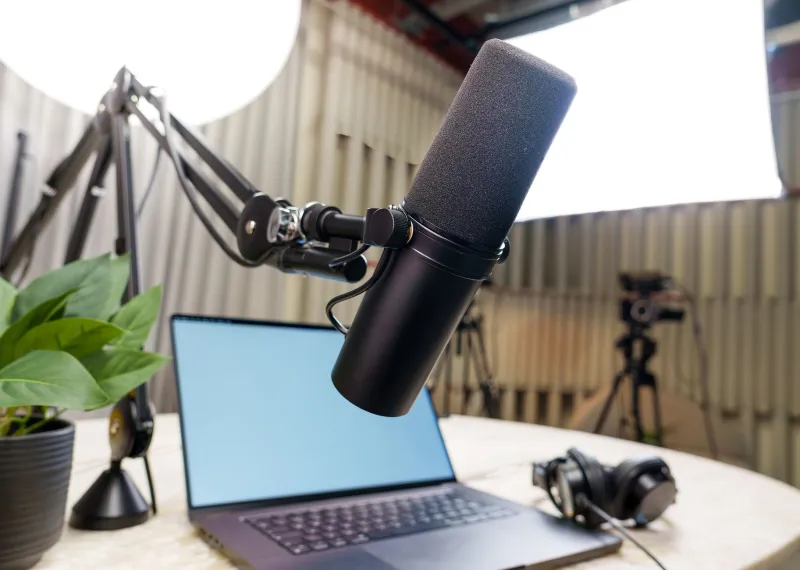
Start with audio, not visuals. Good audio is genuinely non-negotiable. It's the one production element that viewers consistently cite as a dealbreaker. But 'good audio' means clear, present, and natural — not clinically processed. Set your levels, reduce obvious background noise, and then leave it alone. Don't chase perfection at the cost of character.
Let your environment breathe. A background that looks a little lived-in, a bookshelf with actual books, a coffee mug in frame — these are signals that a real person exists in this space. You don't need a messy room, but you also don't need a set that looks like it was assembled by a brand agency.
Build in permission to be off-script. Whatever format your show runs, leave deliberate space for tangents, reactions, and honest moments. If chat sends something funny, respond to it. If something goes slightly sideways, say so. These moments aren't production failures — they're the actual content that keeps people watching.
Audit your overlays. Look at a recording of your stream and ask honestly: what's on screen that a viewer who doesn't already know your show wouldn't understand? Every unexplained element is a small barrier to entry. Trim it down to what actually serves the experience.
A Useful Gut Check
Here's a simple test worth running on your own content: pull up a recording of one of your streams and watch five minutes of it the way a brand-new viewer would. Not with the context of knowing what your show is about or what you're usually like. Just as a stranger encountering it cold.
Does it feel like watching a person? Or does it feel like watching a production?
If the answer leans toward the second one, you don't necessarily need to tear down your setup. You might just need to let yourself be a little more present inside it.
The Streamers Who Get This Right
The broadcasters who build genuinely devoted communities tend to have something in common: they use their production setup as a frame, not a costume. The gear is there to make sure the viewer can see and hear them clearly. But the personality, the weirdness, the opinions, the off-the-cuff moments — that stuff isn't filtered out by the production. It comes through louder because the technical barriers are lower.
That's the actual goal. Not to look like a TV show. To sound and feel like yourself, just clearly enough that nobody has to work to hear you.
Clean up your stream. Invest in your gear. Build a real show. Just don't polish out the person in the process.