From Raw Footage to Real Reach: How to Stop Letting Great Streams Die in Your Archive
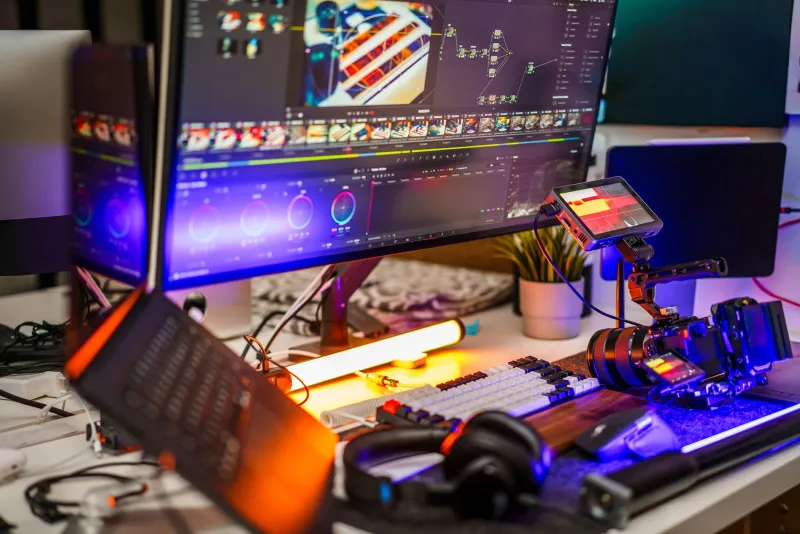
Here's a scenario that plays out for streamers every single week: you nail a two-hour broadcast. The chat is popping, you hit a killer segment around the 47-minute mark, a viewer asks the perfect question, and you give the best answer you've ever delivered on the topic. It's genuinely good content.
Then the stream ends. You click "stop broadcasting," maybe post a quick "thanks everyone" tweet, and move on to planning the next show.
That moment? The one at the 47-minute mark? It's now buried inside a 2-hour raw file that roughly 0.3% of your audience will ever sit down to watch in full.
This is the replay problem — and it's quietly one of the biggest growth leaks in a streamer's entire operation.
Why Raw VODs Almost Never Work on Their Own
Live and recorded content are fundamentally different experiences, even when the footage is identical. When someone tunes into your live stream, they're there for the energy, the unpredictability, the feeling of being part of something happening right now. They'll tolerate the slow starts, the tech hiccups, the moments where you're reading chat and going quiet for 20 seconds. That's part of the live contract.
A VOD viewer has no such patience. They found your replay through a search, a recommendation, or a link someone shared — and they came with a specific expectation: give me the good stuff, fast. If your raw recording opens with four minutes of you adjusting your mic levels and saying "can everyone hear me okay," you've already lost a huge chunk of potential new fans.
Platforms reinforce this dynamic, too. YouTube's algorithm rewards watch time and completion rates. TikTok and Instagram Reels thrive on content that hooks in the first two seconds. Twitter (now X) clips perform best under 60 seconds. None of those environments are built for unedited two-hour recordings — and yet that's exactly what most streamers dump into them.
The Three-Tier Repurposing Framework
The streamers who consistently grow their audience off-platform aren't necessarily producing more content. They're just treating every live session as a content production event, not a one-and-done broadcast. Here's a practical way to think about it in three tiers:
Tier 1: The Archive Cut (for your core audience) This is your edited VOD — the full session trimmed down to remove dead air, technical failures, and anything that simply doesn't hold up without the live context. Think of it as the "director's cut" of your stream. It doesn't need to be short, but it needs to be tight. For a two-hour stream, a strong archive cut might land anywhere from 45 minutes to 90 minutes depending on how dense your content is. Upload this to YouTube with a proper title, thumbnail, and description. This is your searchable, long-term asset.
Tier 2: The Highlight Clip (for discovery) Pull your single best two to five minutes from the session. This could be a hot take, a genuinely funny exchange with chat, a tutorial moment that stands alone, or an emotional beat that lands even without context. This clip goes everywhere — YouTube Shorts, TikTok, Reels, X. The goal here isn't depth, it's reach. You're fishing for new viewers who've never heard of you.
Tier 3: The Micro-Moment (for social proof) This is a 15 to 30 second pull — a single reaction, a one-liner, a rapid-fire tip. It's not trying to explain anything. It's just trying to make someone stop scrolling and feel something. These are fast to produce once you've already identified your Tier 2 clip, because you're essentially just trimming it further.
The whole system only works if you actually implement it consistently. That means building the editing step into your post-stream routine, not treating it as optional bonus work.
Finding the Moments Worth Keeping
One of the most common complaints streamers have about this process is the time it takes to rewatch hours of footage just to find the good parts. There are a few ways to shortcut this:
Timestamp while you stream. Keep a simple notes app open during your broadcast. Every time something genuinely interesting happens — a great question, a big reaction, a segment that's going really well — jot down the approximate timestamp. Even rough notes like "~1:12:00 - good rant about platform fees" will save you enormous time in post.
Use your chat as a signal. If your live audience spiked in engagement, if chat went wild, if someone said "clip that" — those are your highlight flags. Many streaming tools and third-party apps can pull chat logs that you can cross-reference with your recording.
Auto-chapter tools are your friend. YouTube now auto-generates chapters for longer videos, and tools like Descript or even some AI-assisted editors can identify natural segment breaks in your recording. They're not perfect, but they're a solid starting point for orientation.
The Platform Mismatch Problem
Here's something that trips up a lot of streamers when they start repurposing: they edit content for one platform and blast it across all of them without adjusting for format. A horizontal widescreen clip from Twitch dropped onto TikTok with no reframing is going to look like it was made by someone who doesn't actually use TikTok. Because it was.
Every platform has a visual grammar. Vertical video for short-form mobile platforms. Clean captions for accessibility and silent autoplay environments (studies consistently show that a significant portion of social video is watched without sound, especially in the US). Thumbnails that look good at thumbnail size, not just full-screen.
You don't need a full production team to get this right. Tools like CapCut, Descript, and Canva have made it genuinely accessible for solo creators to format clips correctly for multiple platforms without spending a whole day on it.
Making the Archive Work for You Long-Term
Here's the part most streamers underestimate: a well-optimized YouTube archive compounds over time in a way that live streams never will. A properly titled, thumbnailed, and described VOD from six months ago can still be pulling in new viewers today. A raw, unedited stream dump with a title like "Stream 47 - Wednesday" is doing nothing for you.
Think about your archive as a portfolio, not a storage unit. Every edited VOD is a calling card for someone discovering you for the first time. Every highlight clip is a front door into your world. The live stream is where you build community with the people already in the room. The archive is how you build community with everyone who hasn't found you yet.
The two-hour raw recording sitting on your hard drive isn't a finished product. It's raw material. What you build from it is entirely up to you — but doing nothing with it is the most expensive choice you can make.