Small Pond, Big Power: How Niche Streamers Are Winning Where Big Platforms Are Losing
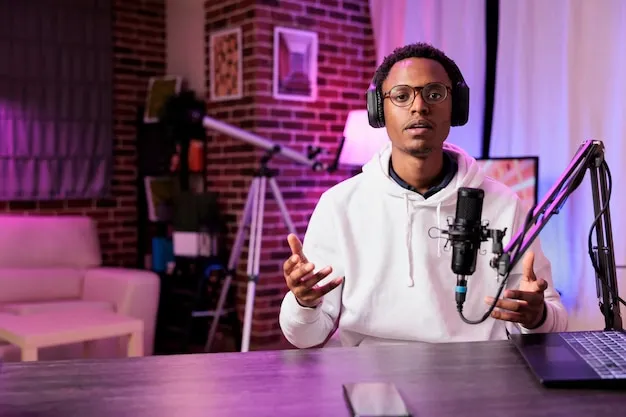
Photo: small community live stream creator broadcasting from home studio with engaged chat, via img.freepik.com
Here's a number that should make any creator think twice: the average Twitch stream is watched by fewer than three people at any given moment. Meanwhile, a fishing guide in rural Tennessee is pulling in consistent four-figure monthly income through a subscription-based live show about fly fishing the Appalachian backcountry. His peak concurrent viewership? Around 200 people.
Two hundred people. That's less than a high school auditorium. And yet, by nearly every meaningful business metric, he's crushing it.
This is the story of 2024 in live streaming, and it's one that the conventional wisdom about online media keeps getting wrong.
The Algorithm Problem Nobody Wants to Talk About
Mainstream platforms — YouTube Live, Twitch, TikTok Live — are extraordinary distribution machines. They can put your content in front of millions of eyeballs. But there's a catch, and it's a big one: those eyeballs don't belong to you. The platform owns the relationship. The platform decides, through its algorithm, who sees your work and when. And the platform can change those rules at any time without warning.
Creators who've built their entire audience on algorithmic discovery are essentially renting an audience. They don't own a single subscriber in any meaningful sense. When the algorithm shifts — and it always shifts — the traffic dries up, the revenue tanks, and the creator is left scrambling.
Niche streamers who build owned communities sidestep this problem almost entirely. Their audience doesn't find them through a recommendation engine. They find them because someone who's passionate about the same obscure thing told a friend, who told another friend. That kind of audience acquisition is slow. It's also incredibly durable.
What "Niche" Actually Means in 2024
When people hear "niche streaming," they often picture something ultra-obscure — like a 24-hour live feed of someone restoring antique typewriters (which, for the record, does exist and has a devoted following). But niche is less about the topic and more about the depth of focus and the specificity of the community.
Take tabletop roleplaying games. Dungeons & Dragons has millions of players across the US. But within that world, there are streamers who've built tight communities around specific game systems, specific play styles, even specific fictional settings. A streamer who runs a long-form campaign using an indie RPG system might never crack 500 concurrent viewers — but their Patreon is full, their Discord is active every single day, and their live show sells out virtual seats for special events.
Or consider the growing world of live craft and maker content. Woodworkers, leatherworkers, blacksmiths, and ceramicists are building subscriber-supported live shows where viewers tune in not for entertainment in the traditional sense, but for education and community. These aren't passive viewers. They're participants.
The Economics of an Owned Audience
Here's where the math gets interesting — and where a lot of mainstream-focused creators would do a double-take.
A creator with 100,000 casual YouTube subscribers might monetize at $2–4 CPM through ad revenue, generating a few hundred dollars per video. Engagement is low, loyalty is low, and the audience has no particular reason to follow the creator anywhere else.
A niche live streamer with 1,500 dedicated community members, 400 of whom pay $10/month for a subscription tier, is generating $4,000 a month in predictable, recurring revenue — before merchandise, sponsorships, or event tickets. That's $48,000 a year from a community that most mainstream creators would dismiss as "too small to matter."
The difference isn't just money. It's stability. It's the ability to plan, invest in better equipment, hire a part-time editor, and actually grow without being at the mercy of a platform's monetization policies.
Why Live, Specifically?
It's worth asking why live streaming, in particular, is such a powerful format for niche community building. The answer comes down to presence and ritual.
When a creator goes live on a consistent schedule, something interesting happens: the stream becomes an event in the lives of their audience. Tuesday nights at 8 PM become a standing appointment. Viewers plan around it. They show up not just to consume content, but to be there — to participate in real time, to interact with the host and with each other.
This is fundamentally different from on-demand content, where the viewer is always in control and the relationship is entirely passive. Live streaming creates genuine social bonds between creator and audience in a way that uploaded videos simply can't replicate. For niche communities especially, that feeling of shared presence is often the whole point.
Building Your Channel, Not Someone Else's
The strategic implication here is something WebcastPilot has always believed in: the most valuable thing a creator can build is an audience that belongs to them. Not to an algorithm. Not to a platform's terms of service. To them.
That means collecting emails. Building a Discord or community forum. Offering direct subscriptions. Going live on your own terms, on a platform or tool that gives you control over the relationship with your viewers.
The niche streamers who are thriving in 2024 aren't the ones with the best production value or the most viral clips. They're the ones who showed up consistently for a specific group of people, earned their trust over time, and built something that a platform update can't erase overnight.
The Takeaway
If you're a creator trying to figure out your lane in live streaming, here's the honest advice: stop trying to be everything to everyone. The mainstream platform game is expensive, exhausting, and increasingly rigged against independent creators.
Find your people. Go deep instead of wide. Build a live show that a specific community genuinely needs — and then own that stream, own that audience, and own your future.
The big pond might look appealing from a distance. But the creators building real businesses in 2024? A lot of them are thriving in much smaller waters.