From Gymnasium to Livestream: How to Broadcast a Local Event Like You Brought a TV Crew
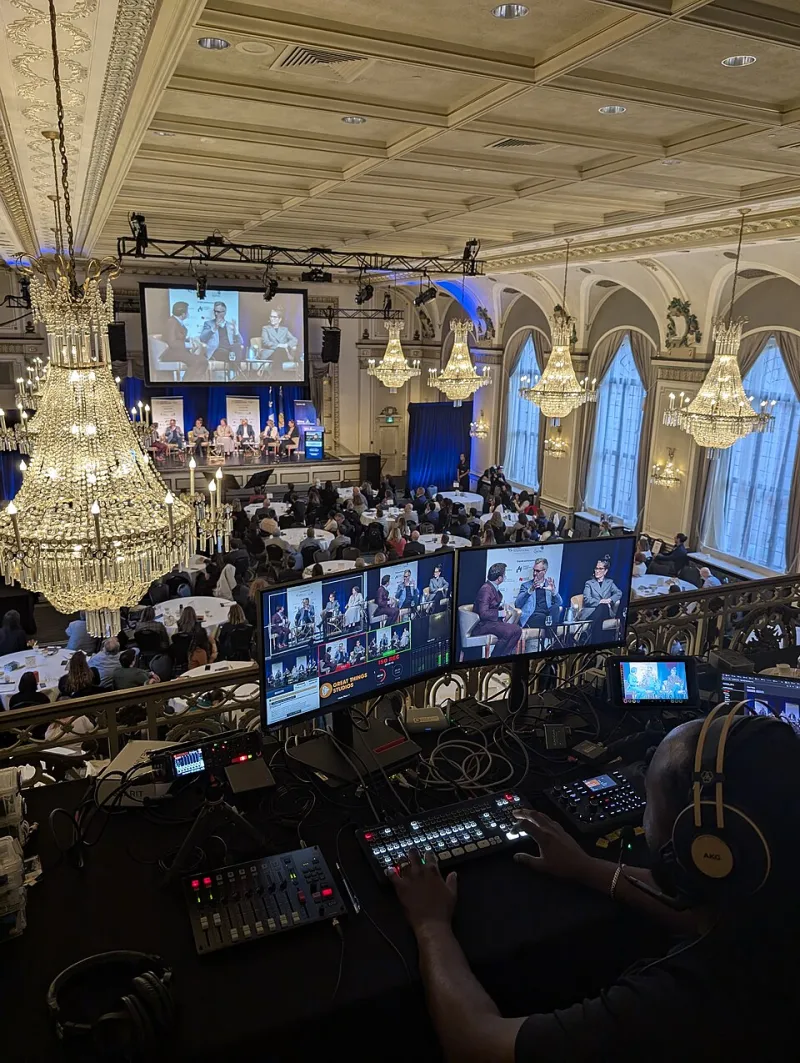
Photo: Ntchi, CC BY 4.0, via Wikimedia Commons
Sooner or later, someone in your community is going to ask. The high school wants its graduation streamed for grandparents in Arizona. The chamber of commerce is cutting a ribbon. The youth hockey championship has families who can't make the trip. These events need broadcast coverage, and the local news isn't coming.
That's an opening for a solo streamer — but only if you can deliver something that doesn't look like a phone balanced on a tripod in the back of a gymnasium. Here's how to pull off multi-camera coverage without a broadcast van.
You Need Three Cameras. Two If You're Honest.
Multi-camera doesn't mean ten cameras. For most local events, three angles cover everything:
- Wide shot: the room, stage, or field. This is your safety angle — it never needs to move, and it saves you when everything else goes wrong.
- Tight shot: faces. A single camera on the speakers, graduates, or action.
- Reverse or detail shot: the audience, the crowd reaction, the product, the trophy.
Two cameras can work if one roams. One camera is not a multi-camera broadcast, no matter how you frame it in the pitch.
The Budget-Friendly Kit
You don't need Hollywood. Here's what actually works for event webcasting:
- Cameras: One main camera you trust plus two affordable options — used mirrorless bodies, PTZ cameras, or even smartphones running a companion app. Modern PTZ cameras are the sleeper pick: one unit covers a wide area, pans smoothly, and is controlled from your switcher.
- Switcher: A hardware unit like an ATEM Mini or a software solution running on a laptop. Hardware is more reliable in a gym with questionable Wi-Fi.
- Audio: This is where amateur event streams die. Venue PA systems vary wildly. Bring your own: a couple of lavaliers for speakers, a shotgun mic as backup, and a recorder capturing a clean feed simultaneously. Always record locally — the stream can fail; your footage shouldn't.
- Connectivity: Don't trust venue Wi-Fi. A cellular bonding device or dual-SIM hotspot is your insurance policy. Test it in the space during setup, not during the ceremony.
Recruit (Cheap) Camera Operators
You can't run three cameras and switch simultaneously — you'll do all three badly. Options that work:
- A friend with a steady hand. One locked-off camera needs almost no skill. "Don't touch it, don't zoom, just watch the battery" is a trainable job in five minutes.
- Remote PTZ operation. If your second and third cameras are PTZs, you control them from your switch position. One person, genuinely multi-camera.
- A film student who wants the credit and the footage. Local colleges are full of them. Offer a copy of the raw files and a credit on the stream.
The Travel-Ready Checklist
Event work means packing like you'll never see your studio again. Beyond the camera kit:
- Gaff tape. More than you think.
- Power strips and extension cords — venue outlets are never where you need them.
- Spare batteries and chargers for everything, including the hotspot.
- Printed shot list and run-of-show from the client.
- A wired internet backup plan if the venue has ethernet.
- Water and snacks. Events run long. You're on duty until the last graduate walks.
Do a full setup and signal test the day before when possible. Day-of surprises are how reputations get made or ended.
Pricing the Gig (Without Underselling Yourself)
Here's the mistake nearly everyone makes: charging what feels polite. A graduation webcast that takes two days of your life — setup, streaming, editing, delivery — is not a $200 favor.
Structure it in tiers:
- Base package: live stream, two or three cameras, event recording. Price by the day, accounting for setup and teardown time.
- Middle tier: add highlight edits, a cleaned-up recording, delivery within a week.
- Premium tier: same-day VOD, custom graphics, social clips, archival hosting.
Check what regional production companies charge for a single-camera crew day — often $1,500 or more — and position yourself as the value option, not the cheap option. Local organizations are used to paying vendors. You're a vendor with better turnaround.
And ask for a testimonial and referrals. The graduation leads to the athletics department. The ribbon cutting leads to the chamber's whole event calendar. Local event streaming compounds fast — the first gig is the hardest one you'll ever book.